Claude Code is the Best Doctor I Never Had
 Image: Viktor from Arcane; a man who cured himself with technology
The project referenced throughout this post can be found on Github here.
Part 1: My Motivations
Two years ago, after a fully healthy 20 years, I was hit with a series of random illnesses which devastated my life, most notably Idiopathic thyroiditis-induced thyrotoxicosis. I saw multiple doctors over three months, but the pieces didn't come together until much later. I took it into my own hands to study medicine in hopes of understanding myself & the people suffering around me.
With all industries around me being automated with AI, I wondered how much generative AI can help in the diagnostic medical field. I wondered, if I had access to the AI tools of today two years ago, would I have found treatment sooner?
Thus, I sought out to create an AI doctor. Not a real doctor—AI will never be that. A core value of a physician is authority: ordering labs, writing prescriptions, and making irreversible decisions. An AI can’t do that, and shouldn’t.
But it can help you think.
The Thinking Problem
When people start feeling symptoms, they want to learn more. Their typical workflow looks something like this:
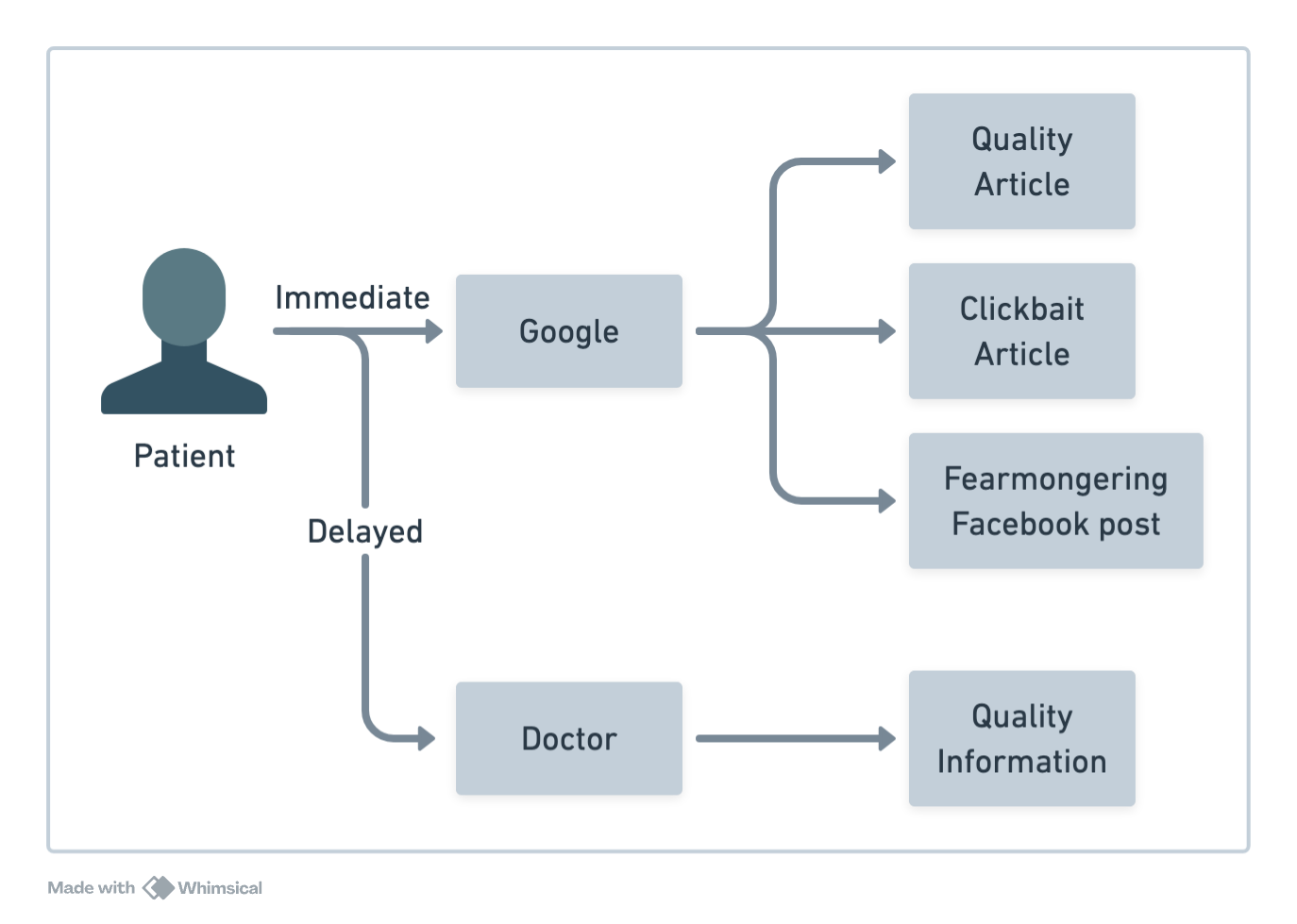
While waiting weeks for an appointment, patients naturally turn to Google, but Google is built for retrieval. It lacks the back-and-forth dialogue and the clinical context a patient actually needs. Google returns an SEO-optimized list of content, where high-ranking misinformation often appears before credible science.
Here's what a patient's workflow looks like with the help of an AI Agent:
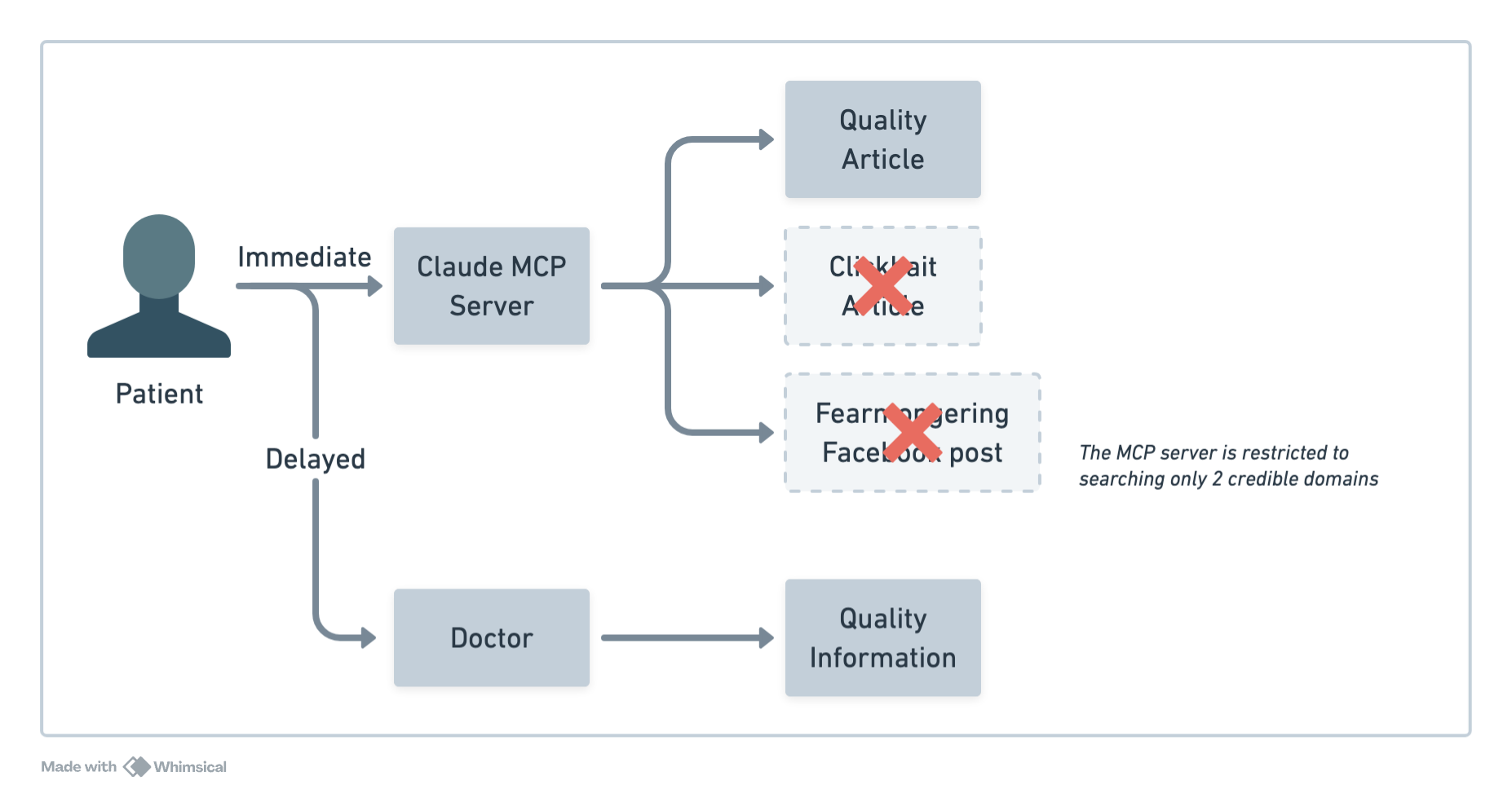
Here, we have dramatically reduced the possibility of low-quality resources plaguing our patient's mind before the doctors visit.
Since patients are going to use the internet anyways, we might as well improve the avenue at which they retrieve their information.
My goal was to give regular people a way to generate a high-quality differential diagnosis while waiting to see a professional, allowing them to ask better questions.
Preparation
The first thing I did was learn medicine. My goal was to at least understand how medical professionals think. I did this by studying NCLEX material, studying Step 1 and Step 2 questions (I even made a website), getting as many certifications as I could, reading textbooks, crashing nursing classes at my university, and even signing for volunteer opportunities at the fire station.
Once I felt I had a working model of clinical reasoning, I turned Claude on myself. I created an MCP server which has an extensive base prompt and has access to two websites: MedlinePlus and StatPearls.
My first test cases were my own illnesses—the ones that had taken months and multiple doctors to figure out. I wanted to know: could Claude surface the right possibilities fast enough that I could bring them to a doctor and actually move things forward?
Results
Claude successfully identified the correct diagnostic path every single time. It surfaced the right possibilities with a speed that would have saved me months of uncertainty.
Why is this important?
Most doctors I've talked to genuinely want to explain things. They just don't have time. A 30-minute appointment barely covers diagnosis and treatment, let alone the questions patients actually go home thinking about.
The script is pretty standard: "Your labs show X and Y, so I'm diagnosing you with this condition. Try Z medication. Questions?" What gets skipped: Why did this happen to me? How do I stop it from happening again? What does this actually mean for how I live my life?
This is where AI gets interesting. This tool now directly impacts the lives of The patient who wants to understand why their A1C is high, or what "prediabetic" actually means in practical terms, or how much exercise really matters for their specific situation. That's where having access to medical knowledge, on demand, changes things.
The doctor focuses on what requires medical training: diagnosis, prescriptions, care coordination. The patient can actually understand what's happening to their body instead of just following orders they don't fully grasp.
Interested in seeing Doctor Claude in action? Read the full example conversation where Claude successfully identifies the correct diagnostic path through systematic questioning.